
Keys to the game: liberty looks to bring belief back to the fanbase against ball state
(Picture taken by Riley Clingman of The Light Radio)
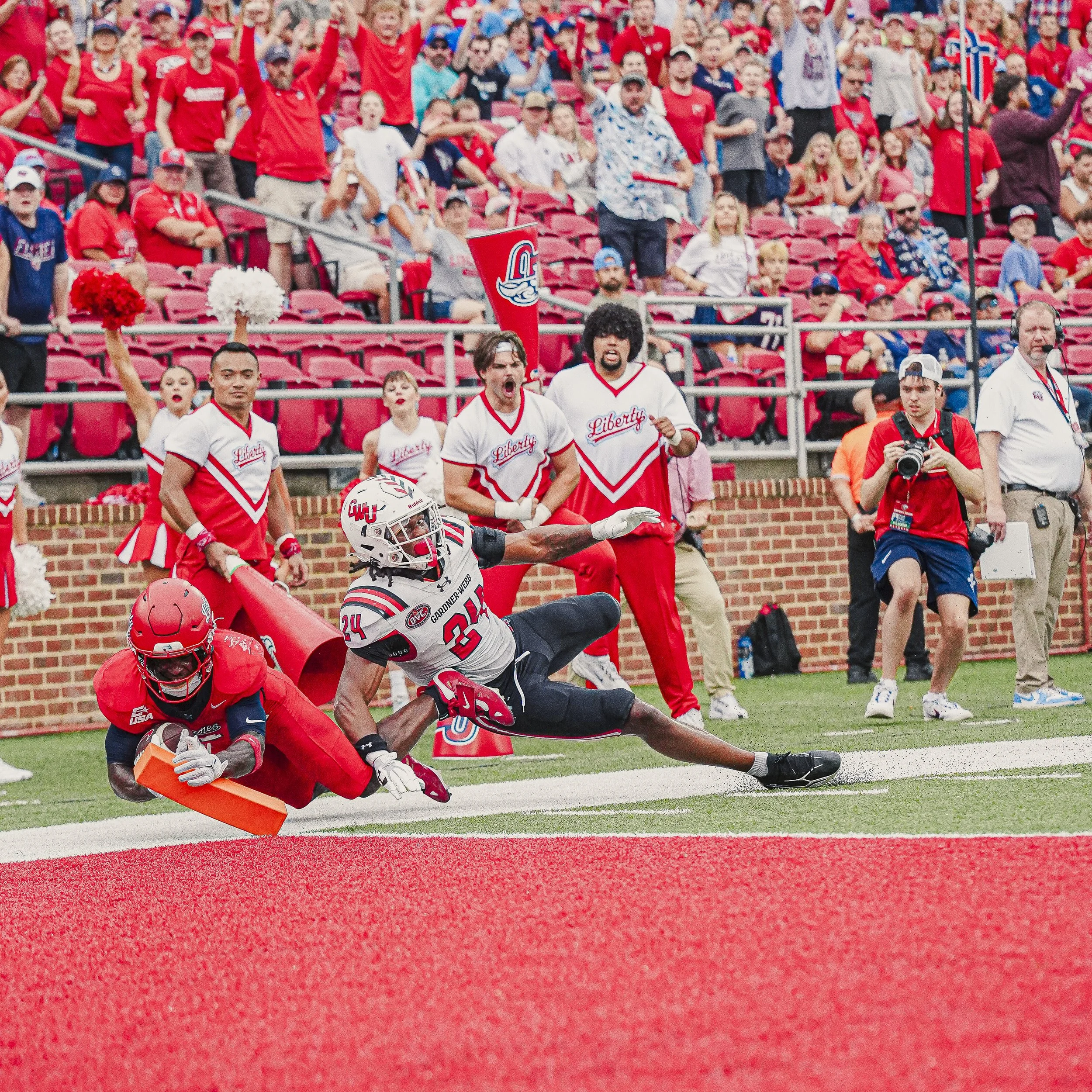
Liberty’s home opener against Gardner-Webb (GWU) raised more questions about whether some issues from the 2025 season remain glaring problems for the Flames. The offense finally established somewhat of a run game, with four rushes of 15 yards or more—an improvement over having just one rush of more than 10 yards against James Madison (JMU). Still, the Flames offense started hot, scoring two touchdowns on just three plays. However, the offense would then go quiet for three quarters before a must-have touchdown pass to senior wide receiver Darius Copeland helped Liberty earn a victory over the Runnin’ Bulldogs, 24–23.
Liberty (1–1, 0–0) will host Ball State (1–1, 0–0) at 4 p.m. Sept. 19 at Williams Stadium. Saturday will mark just the second meeting between the two programs. The Flames won the first matchup, earning a 27–23 road victory over the Cardinals on Sept. 11, 2010, for the second FBS win in program history.
Ball State has experienced two very different results to open the 2026 season. The Cardinals suffered a 56–3 loss to Ohio State (P4) before bouncing back the following week with a 41–17 victory over Stony Brook (FCS).
Based on what both teams have shown through the first two weeks, Ball State presents another challenge for the Flames. Liberty has shown flashes of offensive explosiveness and improved defensively in the second half, but the key will be putting together a complete 60-minute performance. The Flames cannot afford to take their foot off the gas on offense or allow the Cardinals to stay within striking distance.
Here are the following “Keys to the Game” for a Flames victory on Saturday at Williams Stadium:
First Half Defense
(Picture taken by Riley Clingman of The Light Radio)
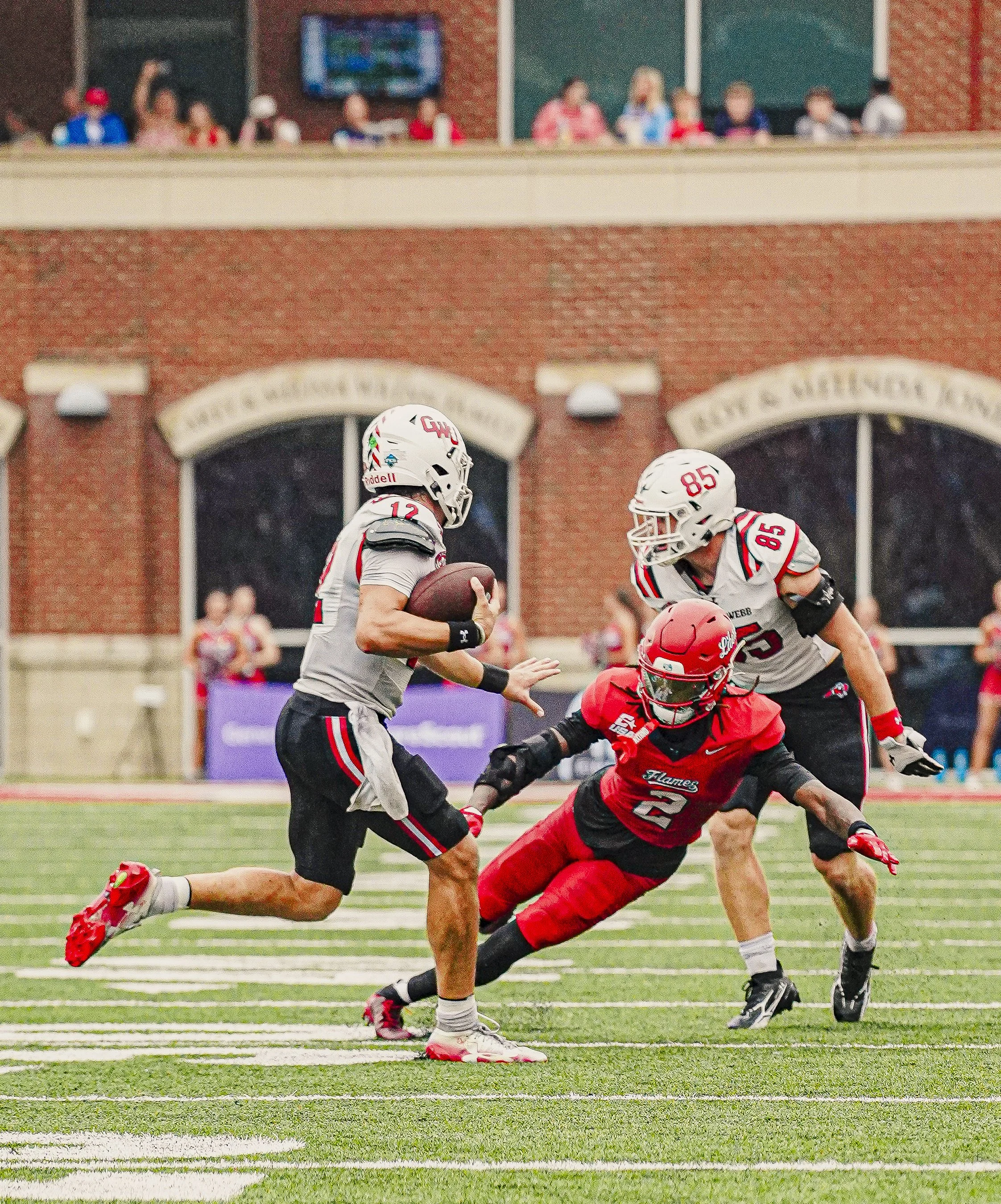
Coaches and players have addressed this area throughout the first few weeks of the 2026 football season. Junior defensive lineman Lorenzo Payne said Liberty’s defense needs to start faster because the Flames cannot always rely on second-half performances, especially as conference play approaches. One way Liberty could limit Ball State senior quarterback Keldric Luster’s playmaking ability is by using a quarterback spy when he escapes the pocket. Senior linebackers Deuce Spurlock and Derrell Farrar could fill that role.
The need for a faster start is evident in Liberty’s defensive numbers through the first two games of the season. The Flames have allowed just six points in the second half — three against James Madison and three against Gardner-Webb — but have surrendered 37 points before halftime, including 17 against JMU and 20 against Gardner-Webb. That 31-point difference highlights the need for Liberty to start games with the same defensive consistency it has shown after halftime. If the Flames can make those adjustments earlier in games, the defense could become one of the stronger units in Conference USA.
Those adjustments will also need to extend to the secondary, which will have a major role in making Luster uncomfortable. Liberty’s defensive backs will need to remain disciplined in coverage, prevent explosive plays, and force Luster to hold onto the ball long enough for the pass rush to get home. If the secondary can consistently win its assignments on the back end, it will give the Flames’ front seven more opportunities to disrupt Luster and prevent him from finding a rhythm.
On the other side, Liberty’s front seven will need to play fast, get Luster on the ground, and make him uncomfortable from the opening whistle. The Flames cannot allow the senior quarterback to extend plays with his legs or settle into a rhythm in the pocket. Liberty’s rotation of nine defensive linemen could be especially important, allowing the Flames to keep fresh legs on the field while maintaining pressure throughout all 60 minutes.
Spread the Ball Around More
(Picture taken by Riley Clingman of The Light Radio)
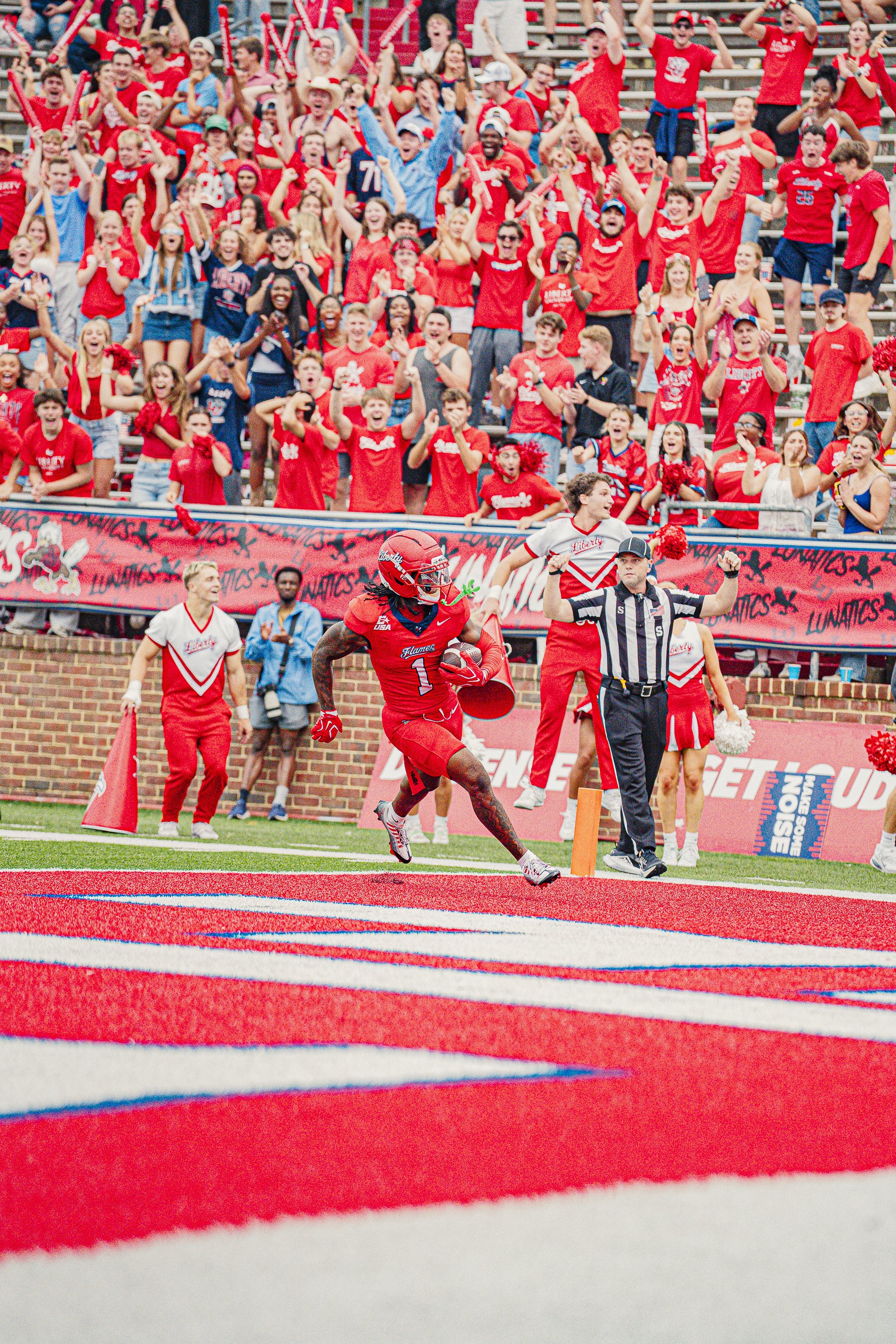
Junior quarterback Deshawn Purdie will also need to find ways to get more of Liberty’s receivers involved in the passing game. Through the first two games, the Flames have 25 receptions from nine different players, but the production has been concentrated among a handful of targets. Senior wide receiver Makai Jackson leads the team with five receptions for 142 yards and two touchdowns, while sophomore wide receiver Bryce Randolph has four catches for 55 yards and senior tight end Zeke Wimbush has four for 51. Getting more consistent production from the rest of the receiving corps could give Purdie more options and make it more difficult for opposing defenses to key in on Liberty’s top targets.
One way to do that is to use more high-percentage throws early in games, including slants, hitches, and out routes. Those shorter routes can give Purdie quick, manageable completions while letting receivers pick up yards after the catch. Establishing that rhythm could help Purdie settle into the game while also forcing the defense to account for more of Liberty’s playmakers. If the Flames can consistently get multiple receivers involved, it could open up more opportunities for explosive plays later in the game.
Ultimately, Liberty’s offense needs to find more consistency early in games, both in the running and passing game. Getting the ball into more playmakers' hands, giving Purdie easier throws, and establishing an offensive rhythm could help the Flames avoid the slow stretches they have experienced through the first two games. While there are areas that need improvement, Liberty has another phase of the game that has consistently done its job and will need to keep doing so against Ball State.
Keep Doing What You’re Doing: Special Teams
(Picture taken by Riley Clingman of The Light Radio)
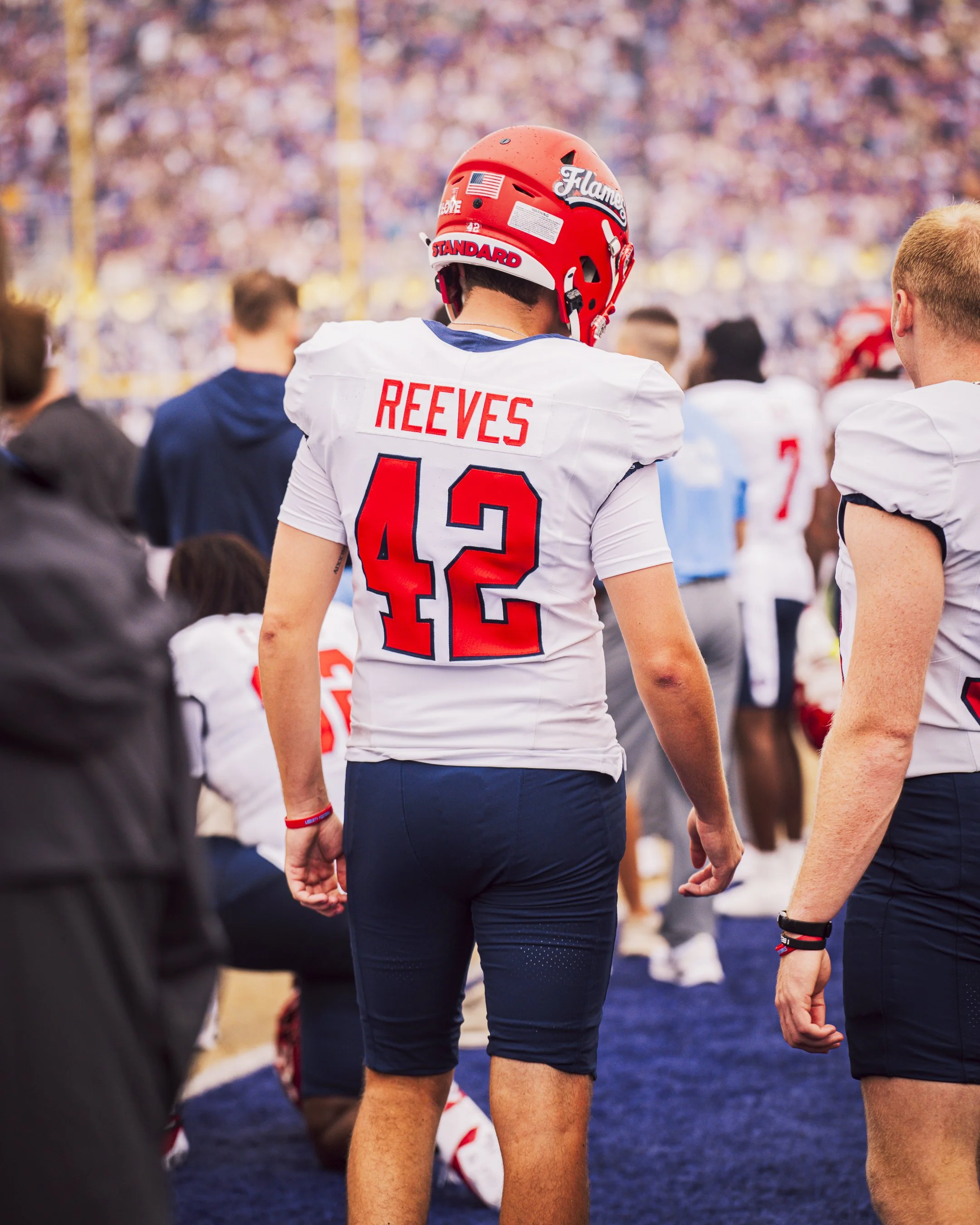
Special teams have quietly been one of Liberty’s most consistent areas through the first two games this season. Senior kicker Chase Reeves is a perfect 3-for-3 on field-goal attempts, including a career-long 42-yarder against James Madison, and has converted all four of his extra-point attempts. Reeves went 2-for-2 on field goals against James Madison before connecting on a 30-yard attempt against Gardner-Webb. His consistency has given the Flames a reliable scoring option when drives stall in the red zone.
Junior punter Sam Crossan has also provided consistency when Liberty has needed to flip the field. Crossan has averaged 42.5 yards on 10 punts through two games, with two punts landing inside the 20-yard line. He averaged 40.3 yards per punt against JMU before averaging 44.0 yards per punt against Gardner-Webb. While those numbers may not jump off the page, consistently creating poor field position for an opposing team can become increasingly important in a game where a possession or two could decide the outcome.
Overall, Liberty does not need to reinvent anything on special teams heading into Saturday. Reeves has been perfect on field goals and extra points, while Crossan has consistently given the Flames’ opponents poor field position. If the offense can become more consistent and the defense can start games faster, special teams can continue serving as a stabilizing piece for Liberty. In a matchup against Ball State, where field position and points could become especially important, the Flames simply need to keep doing what they’re doing.
Score Prediction
Liberty 27, Ball State 24
I expect Saturday’s matchup to be much closer than Liberty fans may think it’s going to be. Ball State has already shown it can respond after a difficult opening week, bouncing back from a 56–3 loss to Ohio State with a 41–17 victory over Stony Brook. Meanwhile, Liberty is still searching for consistency after needing a late touchdown to escape Gardner-Webb in its home opener.
The biggest question for Liberty will be whether the defense can avoid another slow start. The Flames have allowed 37 first-half points through two games but just six after halftime, making the opening 30 minutes against Luster and the Cardinals particularly important. If Liberty’s secondary can limit explosive plays and the front seven can consistently pressure Luster, the Flames should have opportunities to control the game. However, if Ball State can find success early, this could turn into another fourth-quarter battle for Liberty.
On offense, Purdie will need to establish a rhythm early and get more of the receiving corps involved. The running game showed improvement against Gardner-Webb, and Liberty has enough playmakers to put points on the board, but the offense cannot afford another extended stretch without scoring. With special teams providing consistency through the first two games, I expect Liberty to do enough in all three phases to come away with a 27–24 victory, but I don’t expect the Flames to pull away from the Cardinals.